
Painful Endings, New Beginnings

Dr Zibah Nwako

Blog post by Dr Zibah Nwako School of Education, University of Bristol

Having recently completed my studies during the COVID-19 pandemic, I’ve been thinking a lot about managing life within these confines and how it affects my career aspirations. It’s one thing to shut one door and try to open another one in normal circumstances, but given the pressures of today’s uncertain world, these endings and beginnings are an entirely different challenge.

Whether it’s to do with our work, relationships, health, finances – some of us may have been standing at a crossroads for a while, seeking answers, wondering which direction to turn or even grasping at what we believe to be opportunities but are not quite in tune with what we desired or envisaged. This can be quite an uncomfortable, even painful, in-between place to be. If you are in this space, please know that you are not alone. (more…)

Fintech + Inequality, and the need for education

Innovation or Inequality? Blog by Laura Gemmell, FARSCOPE PhD Student, University of Bristol

I love giving talks on payments technology (it was part of my job for over four years after all). I take one of my cards out (usually a Monzo or Starling due to the jazzy colours):
“Do you know how many generations of payments innovation are on these cards?”

It’s five:

  • Embossed card number (this is how the numbers are usually raised, in case civilisations collapse and shops need to return to tracing these with emboss machines. I’ve always thought this seemed silly, but 2020 has taught me anything could happen…)
  • Magstripe (these are still used in other countries, including the USA)
  • CHIP (for your CHIP and PIN transactions)
  • CVC (the card verification number, sometimes called CVV or CV2 – this is the 3 or 4 digit number usually on the back of your card which you type in when online shopping. It’s purpose is to make online shopping more secure)
  • Contactless (we can now pay using our phones using this technology).

(more…)

Concerning Chilean and Latin American neoliberal processes; An Interview with Dr Carlos Ruiz Encina.

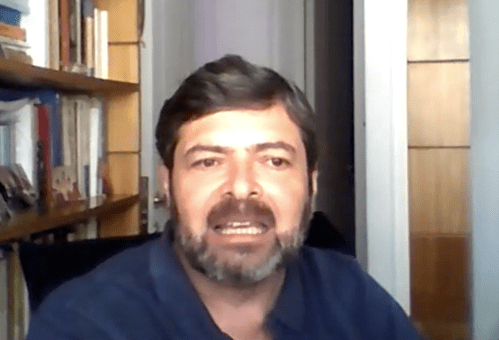
Interview by Hugo Parra Munoz, Doctoral Student, School of Education University of Bristol (Long read)

Dr Carlos Ruiz Encina

Picture 1. Dr Carlos Ruiz Encina during the interview. After a week from the interview, Professor Ruiz Encina has been nominated by prominent politicians and social activists to be a candidate for elaborating the new Chilean constitution.

Exciting changes are coming from the South of Latin America. We have a conversation with Dr Carlos Ruiz Encina. His book The politics in neoliberalism, experiences from Latin America (2019, LOM) remarks his in-depth revision of the current social context in that part of the globe. While, his last book, Chilean October: the emergence of a new people (2020, Taurus), addresses the crisis of neoliberal subjects depicted by the Chilean current social uprising. Dr Ruiz-Encina’s works in the Latin American Studies Programme and the Social Sciences Doctoral Programme at the Universidad de Chile, along with his participation in Fundacion Nodo XXI, transform him in one of the most interesting critic scholars of the region. The conversation is realised in the eve of the Chilean referendum for changing the constitution. The referendum has brought together international interest, since it could represent the end of the neoliberal experimentation in Chile. Neoliberalism was born in Chile, could it die there; and what this entails for the educative system? (more…)